Letters From Miss Louise Le Breton, Signal Corps Telephone Operators’ Unit, A. E. F. , To Her “Folks” In Berkeley, California[1]
Somewhere in England,
Sometime in March, 1918.
Dearest Little Andree:
English Slang
They told me yesterday that I had to get up at the “top of the morning.” Search me if I knew what they meant! Why they didn’t say seven o’clock, I don’t know!
We got permission to go to the show last night, and we asked one of the maids how to get there. She told us we had to take the tram (car) at the bottom of the street. Well, we didn’t know what the bottom of the street was, but we figured out it was the end. We marched quite a few blocks and finally got to the end—but no sign of trams anywhere. We walked back and after many inquiries found out that the bottom of the street meant the corner of the thing! Imagine! Some of us went out yesterday afternoon to buy some little things and a bunch of kids at the “bottom” of the street exclaimed: “They’re ‘ Mericans—look at their ‘ ats!” We never imagined before that our hats were so typically American.
But you should have seen those rosy cheeked little kids! They rushed to us and asked us for some American pennies and nickels, and Raymonde and I gave them all we had. We’re ruined financially now!
Arrival in Town
We’re in the best hotel in town—the old furniture and drole arrangement of things do remind me of the old French houses and it’s fun to look over and touch everything. You should see the miniature elevators! By the way, they call them “lifts” here. When we arrived here and after I had registered, they told me to take the lift to the fourth floor. My eyes got as big as saucers. “Take the what?” I couldn’t imagine what lift meant! I was so horribly sleepy. We got here at one o’clock in the morning. Of course we had fallen asleep in the wagons, one on top of the other (the wagon was big enough for five and we were seven). We had to get ready and fall in line inside of five minutes! We were all so dirty, you wouldn’t have recognized your sisters; black streaks on our faces, our hair falling down, our clothes all mussed up! We looked like shipwrecks.
But during the day we enjoyed our ride. They never tell us ahead where we are going, and we were scrutinizing the map to see in which direction the train was bound.
It’s Spring here, and everything is in bloom in the country. Oh! The beautiful country; green grass all over, that healthy, beautiful green; and the enormous lawns were so well taken care of. The roads were so clean, and the old-fashioned carriages and mules—how we enjoyed the sight of them!
We’re having a lot of fun with the British money, too. The pennies equal two cents, and they’re as big as dollars. I changed a quarter and they gave me about twelve of those big things.
The soldiers are all craving for candies. I gave them all I had. That means a sacrifice for you and Nanette; each time you have a penny, think of the soldiers.
Gas Masks
Dear Mother:
This part of France is wonderful. The little village where we are staying has only fifteen hundred inhabitants. The large fields sprinkled with daisies that surround it, the little streams running everywhere, the old trees, and the red-tiled houses-all are charming. One might call it the country of fairies.
The house where we are staying is new, very modern, very comfortable.
Upon arriving here, we were given two small medals with our names, regiment, et cetera, in case we should be wounded in the raids. They are also giving us gas masks. It is not probable that we will have occasion to use them, but too much precaution cannot do any harm.
The night of our arrival in the most beautiful city of France, the long- range guns woke us about one o’clock in the morning. The siren sounded and they came and got us out of bed (we were worn out with fatigue) to send us down to the cellars.
The Zeppelins like to torment the inhabitants and are greatly amused to see the poor unhappy beings rushed frantically to their caves. Wretched Germans! The longer I live here, the more I detest them.
Our work is very interesting but rather hard now, as they expected twenty operators here, and there are only eleven. The work, therefore, is just double. However, we manage very well.
Telephone Review, New York, AT&T Internal Magazine, July 1918, page 207; https://www.google.com/books/edition/Telephone_Review/aSgoAAAAYAAJ ; Retrieved on 6 July 2026.
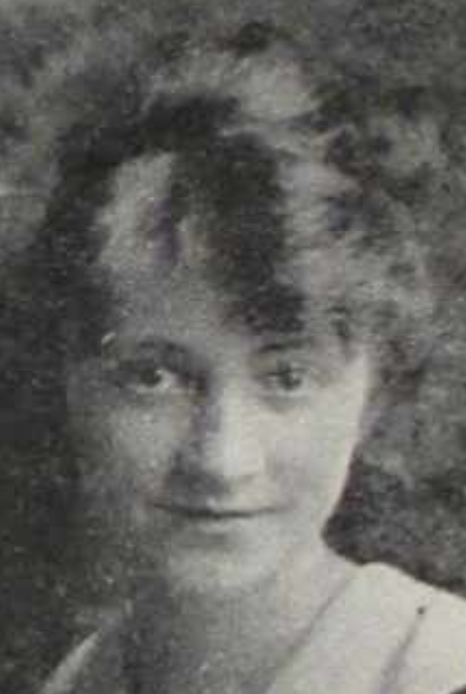
[1] Louise Le Breton (1889-1986) was born in France and served in the First Group with her sister, Raymonde Le Breton (1890-1988).
Leave a Reply